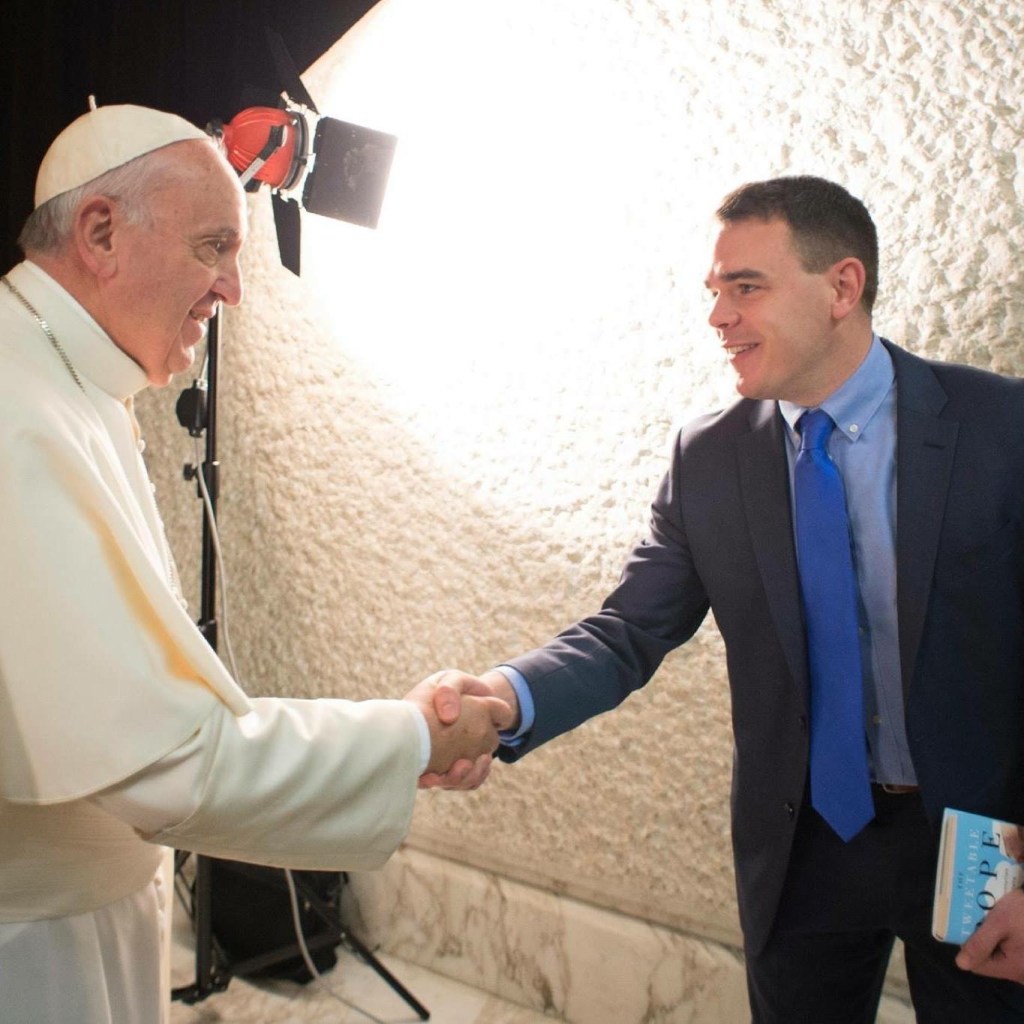
Michael J. O’Loughlin, author of “The Tweetable Pope: A Spiritual Revolution in 140 Characters” (Harper One, 2015) was kind enough to answer some questions via email after I published the previous blog dedicate to his book. Enjoy this bonus.
Q: Your book is a detailed summary of the main topics in which Pope Francis puts special attention and how he uses Twitter to spread them. What motivated you to write it?
MJO: I’m on Twitter all the time, beginning in the morning when I’m getting caught up on the news, and I noticed that the pope’s tweets kept popping up. He would tweet, usually before I was awake, and then people would retweet them and quote them all day. It occurred to me that this style of communication was new for a pope and that it is really resonating with people. So it compelled me to look a bit deeper into what was happening.
Q: It is clear that the invitation of Francis is to imitate Jesus and “make a mess” where service, love and mercy have the main emphasis. What do you think, however, that sometimes the message must fight against the apathy of some Catholics?
MJO: When the pope says he wants Catholics, especially young adults, to make a mess of things, I think what he means is that he wants Catholics to bring their faith out into the streets. This means using their energy to make things better, to fight against systems that oppress rather than free and to help make the Gospel fresh for a new generation. It’s messy work.
“Who am I to judge?” goes beyond the original question Pope Francis was responding to, about gay priests, to include all kinds of people who have felt judged.
Q: It is precisely about that apathy, that globalization of indifference that Pope Francis tries to warn us and wake us up. Do you think that in these four years Francisco has had an impact manifested in concrete facts? Obviously Rome was not built in a day, but some skeptic might say that despite the Pope’s messages, the world remains the same or worse.
MJO: It’s a good question. Obviously the world has changed a lot in the past four years, but Pope Francis has kept the course. It’s not difficult to understand why: He is focused on Jesus and the Gospels, and the message of loving God and loving your neighbor are eternal. The pope continues to be a beacon of hope for countless numbers of people around the world, which I suspect will continue regardless of global events.
Q: We can say that the phrase “Who am I to judge?” is in some way the hallmark of this papacy?
MJO: I think we can! In fact, I’m working on a book chapter right now that makes this argument. It’s hard to think of another sound bite that so neatly captures the essence of the Francis papacy, isn’t it? And the phrase goes beyond the original question he was responding to, about gay priests, to include all kinds of people who have felt judged.
Featured Image: MJOLoughlin Facebook Page
 Pedrostero